Lower blepharoplasty in Korea costs roughly 2 to 5 million KRW (about 1,500 to 3,700 USD). Korean clinics predominantly reposition the fat that creates under-eye bags rather than removing it, because removal in a younger face produces a hollow that is difficult to correct later. Bruising is the main constraint: expect two to three weeks before it fully clears.
Procedure time
60 to 120 minutes
Anesthesia
Local with sedation
Stitch removal
Day 5 to 7, or none for the transconjunctival approach
A 6-floor practice built around three things: deep plane facelift by a 32-year surgeon, autologous SVF cell work processed in its own laboratory, and body contouring. Held JCI accreditation 2015 to 2018.
Lower blepharoplasty addresses under-eye bags, dark shadowing and the groove between the lid and the cheek. Two approaches dominate. The transconjunctival route enters through the inside of the lid, leaves no external scar and suits patients with good skin tone. The subciliary route uses an incision under the lash line and allows skin removal as well, which is necessary when laxity is significant. Korean practice leans heavily toward repositioning the herniated fat down into the tear trough rather than excising it, since removal often creates the hollow look that patients then seek filler to correct.
What it treats
Under-eye fat bags
Tear trough hollowing and dark shadowing
Fine crepey skin on the lower lid
The step-off between lower lid and cheek
Why Korea for Lower Eyelid Surgery
Under-eye work is one of the highest-volume procedures in Korean aesthetic surgery, driven by a domestic patient base that treats dark circles as a primary concern rather than an afterthought. Fat repositioning technique is correspondingly refined here, and several Seoul clinics build their entire practice around the lower lid. That specialisation matters because lower blepharoplasty carries a higher complication profile than upper lid work: over-resection, lid retraction and ectropion are all harder to fix than to avoid.
Lower Blepharoplasty Cost in Korea
Approach drives the price. Transconjunctival fat repositioning without skin excision sits at the low end; adding skin removal, a canthopexy to support the lid, or fat grafting raises it. Revision after over-resection elsewhere is priced separately and is meaningfully harder.
Procedure
Typical range (KRW)
USD estimate
Transconjunctival fat repositioning
2.0M - 3.5M
$1,500 - $2,600
Subciliary with skin excision
2.5M - 4.5M
$1,900 - $3,400
With canthopexy
3.5M - 5.5M
$2,600 - $4,100
With fat grafting to tear trough
3.5M - 6.0M
$2,600 - $4,500
Revision lower blepharoplasty
4.0M - 8.0M
$3,000 - $6,000
Prices are indicative ranges collected from public clinic pricing and consultation quotes. Updated February 2026. USD conversion at 1,340 KRW/USD.
Sinsa and Gangnam Station hold several practices that specialise in the lower lid specifically, some of which decline other eye work entirely. That narrowness is a reasonable filter here. Ask how many lower lid cases the surgeon performs monthly and whether they routinely add a canthopexy, since lid support is what prevents the pulled-down lower lid that is the most common poor outcome.
What to Expect: Before, During & After
Bruising below the eye is more persistent than above it and often tracks down the cheek before clearing.
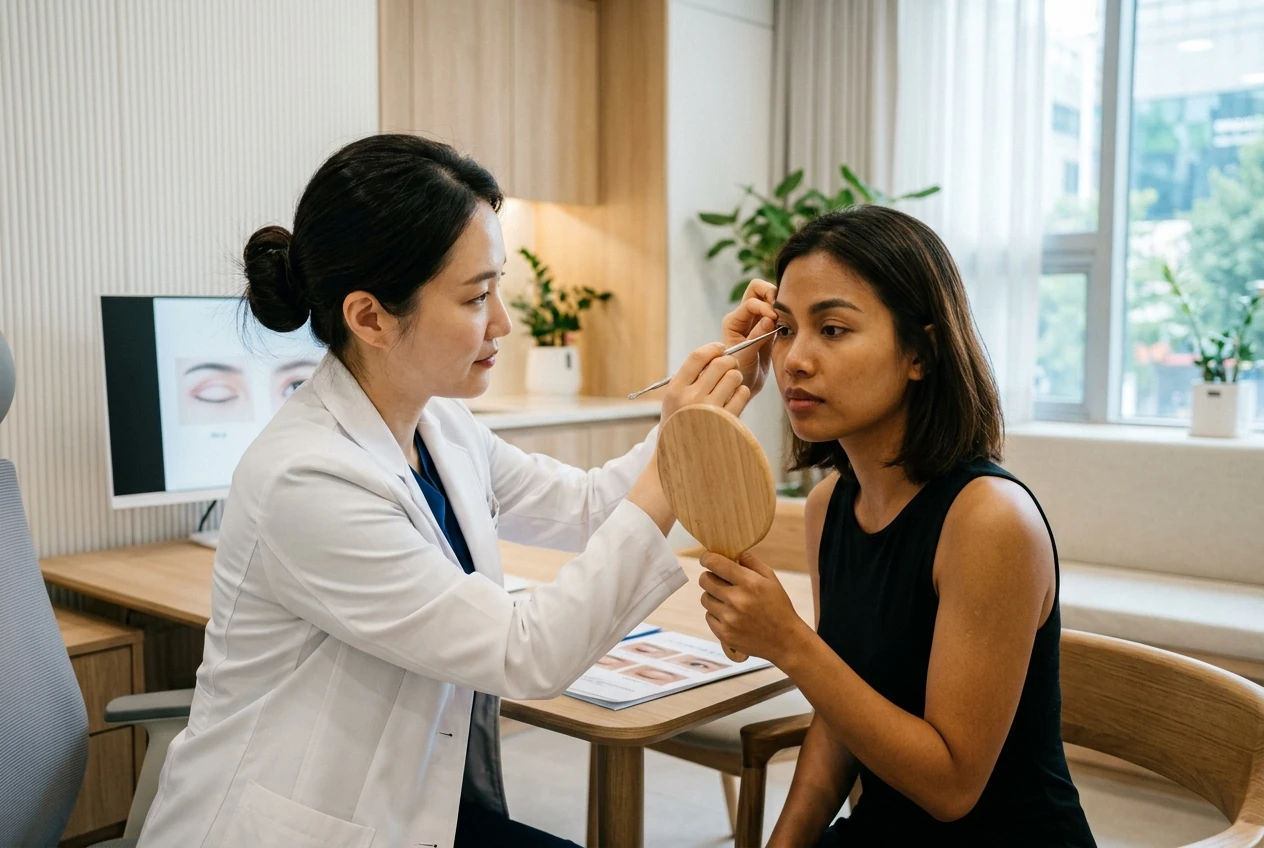
ConsultationAssessment of fat herniation, skin quality, lid laxity and the tear trough. A snap-back test checks lower lid tone.
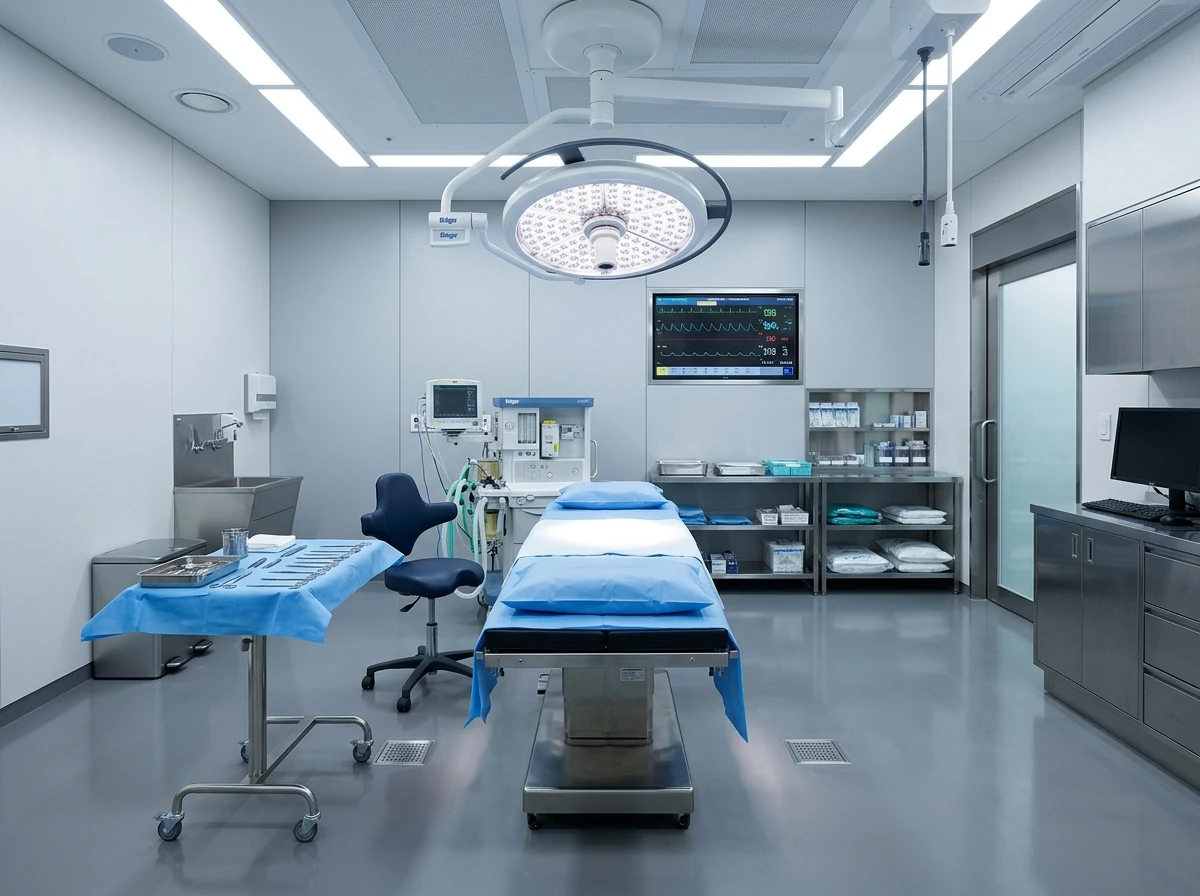
Surgery60 to 120 minutes. The transconjunctival approach leaves no visible incision.
Days 1 to 5Swelling and bruising peak and may spread down the cheek. Cold compress and head elevation.
Day 5 to 7Stitch removal where an external incision was used.
Weeks 2 to 3Bruising clears enough for makeup coverage. Mild lumpiness along the repositioned fat is normal.
Months 3 to 6Contour settles. Judging the tear trough before month three leads to unnecessary filler requests.
For Medical Travelers
Allow 10 to 14 days. Bruising below the eye is the limiting factor rather than any medical restriction, and it photographs badly for longer than patients expect. Sleeping propped up and avoiding bending or lifting for the first week reduces swelling meaningfully. If you are also having upper lid surgery, combine the two in one session rather than separate trips.
Most Korean surgeons reposition it into the tear trough rather than removing it, because removal in a face that will continue to lose volume tends to produce hollowing within a few years. Ask specifically which the surgeon plans to do.
Is there a visible scar?
Not with the transconjunctival approach, which enters through the inside of the lid. The subciliary approach leaves a fine line under the lashes that fades but does not vanish.
How long does the bruising last?
Two to three weeks for full clearance, longer than upper lid surgery. The bruise commonly migrates down the cheek before fading, which surprises people who were expecting it to stay localised.
Can filler do the same thing?
Filler can camouflage a mild tear trough but does not remove herniated fat. Where the bag is the problem, filler placed over it usually makes the area heavier. Where volume loss is the problem, filler is the better answer.
This guide is editorial information, not medical advice. Cosmetic surgery carries risks and outcomes vary by individual. Always consult a licensed specialist and review the clinic's credentials before booking. We do not perform procedures and are not affiliated with the clinics listed unless explicitly marked.